
The structure of the nail (hands and feet) and how to keep it in excellent condition

How often do we take care of our nails only for aesthetic reasons?
A quick trim, a bit of nail polish, a hurried filing… and off we go.
But nails, just like hands and feet, deserve much more attention.
They are small, silent… yet they speak.
They speak about us, about how we feel, and about how deeply we truly listen to ourselves.
In this new chapter, I would like to take you on a small journey to discover the structure of nails, both hands and feet, and to share with you simple but valuable tips to keep them healthy every day.
A micro-world right before our eyes
Nails are not just a “hard plate”, as is often believed.
They are a living, complex structure that works silently every day to protect us, support us, and… tell our story.
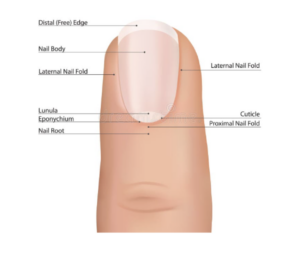
The main parts of the nail (in simple words)
-
Matrix – the “heart” of the nail, hidden at the base. This is where the nail is formed.
-
Lunula – the small white half-moon sometimes visible at the base of the nail. It is part of the matrix.
-
Nail bed – the skin beneath the nail, from which it receives nourishment.
-
Nail plate – the nail itself, made of keratin (a strong protein).
-
Cuticle – a natural barrier that protects the nail from bacteria and external aggressions.
Hands and feet: same nails, different lives
Even though the structure is the same, hands and feet live very different realities.
-
Fingernails grow faster (about 3 mm per month).
-
Toenails grow more slowly and are often more “stressed”: tight shoes, lack of air, moisture…
-
Feet endure more silent micro-traumas. Nails thicken, change shape, and become more fragile or prone to infections.
Did you know?
Why do toenails thicken with age?
It’s a defense mechanism! Over time, shoes compress the matrix, and the nail responds by producing harder layers to protect itself.
How to keep nails strong and healthy
5 “behind-the-scenes” tips
Forget the usual advice. Here are some small, practical (and little-known) actions that truly improve nail health.
1. Nourish the matrix, not just the surface
Nail oil is helpful, yes—but massaging it into the base of the nail, where the matrix is located, makes the real difference.
Try warm castor oil in the evening before going to bed.
2. Don’t cut the cuticles
It may seem like a purely aesthetic detail, but it’s a common mistake.
Cuticles protect the nail. It’s better to soften them and gently push them back with a wooden stick.
3. Avoid silent micro-traumas
Shoes that are too tight, typing with your nails, opening objects with your hands…
Every small trauma adds up and, over time, changes the nail’s shape and strength.
4. Observe the color of your nails
Pale nails, unusual ridges, splitting, or color changes can tell a lot.
There’s no need to panic, but it’s worth paying attention to these signals.
5. Create a small weekly routine
-
After your evening shower, massage your nails with a vegetable oil
-
Apply gentle pressure to the lunula (stimulates growth)
-
Inhale a few drops of a calming essential oil (lavender or chamomile)
A deeper perspective
Caring for your nails is not just an aesthetic treat.
It is a gesture that goes much deeper.
It means giving value to those parts of the body that accompany us everywhere, silently.
It is a way of saying to ourselves:
“I see you. I listen to you. I take care of you.”
And if we think of nails as part of our contact with the world, it becomes even more important to care for them with presence and awareness.
Now it’s your turn
Have you ever thought about your nails in this way?
Is there a gesture you use to take care of them? Or maybe a grandmother’s remedy that still works today?
Write to me in the comments or share your experience.
See you soon
With care and beauty,
always and everywhere
with Wellnessaround