Reflexology… Hands or Feet?

Dear readers, loyal clients and friends,
as promised, today we enter the heart of our journey: reflexology.
We mentioned it in the last article, when I told you that the feet “speak” to the whole body. But today we go further: hands or feet? Where does our body tell us more? Where can we listen to it better?
I’m often asked:
“Nicola, is plantar reflexology more effective, or hand reflexology?”
Well, the answer isn’t that obvious… but let’s try to understand it together.
Two maps, one body
Both the hands and the feet have a reflex map of the entire body.
This means that by stimulating specific points on the hands or feet, we can influence organs, systems, glands and even our emotional balance.
But what truly changes between the two?
Plantar reflexology: it works on a deeper area of the body, slower but also more powerful. The feet are connected to our most grounded part — instinctive, visceral. It’s as if we were speaking directly to the autonomic nervous system. The feet are far from the head, but close to our “ancient memory.”
Hand reflexology: it is faster, more immediate, ideal for those who are often on the move or need to relax during the day. The hands are tools of expression, communication and creation. Through hand reflexology, we can work on stress, the mind and emotions in a more direct and subtle way.
Benefits: similarities and differences
Both techniques:
✔ Promote deep relaxation
✔ Stimulate self-healing
✔ Support energetic balance
✔ Improve circulation and organ function
But depending on the moment you are experiencing, I may recommend one rather than the other.
If you feel “disconnected” from your body, stressed, confused → feet
If you are mentally overloaded, lacking focus or calm → hands
A bit of history…
Reflexology is not a modern trend.
One of the oldest traces of practices similar to reflexology comes from China. During the Tang Dynasty (618–907 AD), foot and hand care was considered an important part of maintaining physical and energetic balance. In medical texts from that period, we find references to specific points on the soles of the feet and the palms of the hands connected, according to traditional Chinese medicine, to the vital flow of the body (Qi).
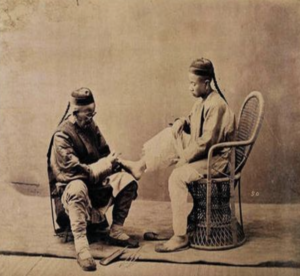
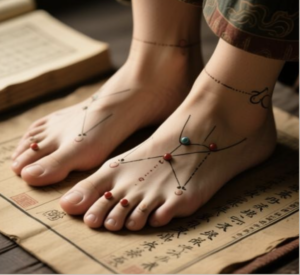
Massaging these areas was not only a remedy for minor discomforts: it was also practiced to relax, promote circulation, and prevent ailments. In many families and wellness centers of the time, these treatments were a daily act of care and harmony— a tradition that has, over time, inspired many modern reflexology techniques.
In Ayurvedic medicine, there is talk of the marma, energetic points, some of which correspond to those used in modern reflexology.
And in Greek mythology? The foot had a special symbolism: it was sacred. It was the point of contact with the Earth, and oils and massages were used in rituals to purify the soul through the feet.
So then… hands or feet?
Here’s my answer: it depends on you.
Every body has its own responses, every person has their own “access point.”
As a wellness practitioner, I guide you in listening to yourself. There is no “stronger” technique—only the right one for the moment you are living.
If you wish, we can begin this listening journey together.
Contact me for a free consultation or to receive your treatment directly in your home.
Let’s bring attention to where few people look… and from there, allow change to unfold.
With care,
Nicola – Wellnessaround
Your space of well-being, wherever you are.